The Link Between Emotional Wellbeing and Student Absence (DfE Report 2025)
The continuous rise in student absence across UK schools is a growing concern. It’s a challenge that weighs heavily on school leaders and local authorities alike, knowing that every day missed can impact a young person’s educational progress and their potential to flourish. A report from the Department for Education (DfE), released in May 2025, offers vital clarity, helping us understand the connections between emotional wellbeing and school absence in students aged 13 to 16.
While this report specifically focuses on Year 11 students, its insights spark broader questions about wellbeing across all age groups. After all, the report itself acknowledges that it is currently unclear at what age mental health starts affecting absences. This means our commitment remains to ensure all students thrive, no matter their age, and that we understand the earliest indicators of potential challenges.
This blog unpacks the report’s key findings, helping schools and Local Authorities (LAs) discern what drives absence and, crucially, what actionable steps can be taken to support every student.
Why Students Are Missing More School
Since the Covid-19 pandemic, there has been a noticeable shift in school attendance patterns. The overall absence rate for the 2023/24 academic year stood at 7.1% across all schools, a figure nearly double pre-pandemic levels. This means that in 2023/24, a staggering one in five students missed 10% or more of possible sessions. This isn’t just a statistic; it represents countless young people experiencing barriers to accessing learning and valuable social connections.
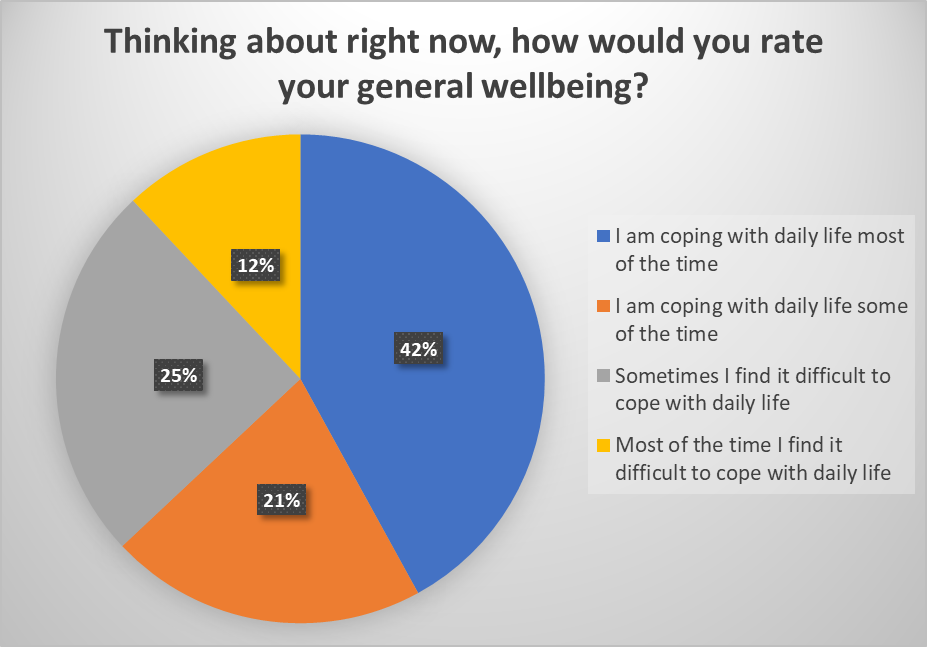
Our own research at Psychology Direct reinforces these concerning trends. In our survey of students, we found that 37% reported finding it difficult to cope with daily life most or some of the time, with only 42% saying they cope with daily life most of the time.
Emotional Wellbeing and Authorised Absence
The DfE’s 2025 report offers a crucial piece of the puzzle:
One of the main things that contributes to students’ authorised absences is poor mental health. Schools are more likely to be notified when a young person’s mental health worsens because of genuine unwellness, anxiety, or challenges that prevent them from attending.
The research also reminds us that it’s not just a general feeling of low wellbeing that links to absence. Instead, it’s when a young person experiences more specific and significant psychological distress, such as anxiety or other emotional challenges, that a clearer connection to missing school emerges. This points to the need for targeted support for those genuinely struggling.
Beyond Mental Health: The Other Key Absence Predictors
While emotional wellbeing is a causal factor for authorised absence, the report identifies several other crucial variables that strongly predict high levels of absence across both authorised and unauthorised categories:
- Socioeconomic Factors: Students eligible for Free School Meals (FSM)
- Vulnerable Groups: Those with Special Educational Needs (SEN) or a long-standing illness or disability (LSID).
- Family Composition: Children from single-parent households were also found to be absent more than those from two-parent households.
- School Experience: Students who reported enjoying school less were more likely to be absent for both authorised and unauthorised reasons. Similarly, disliking teachers, experiencing bullying, and cannabis usage were also linked to higher absence.
- Parental Aspirations: Students whose parents aspired for non-academic post-16 pathways showed higher rates of absence, particularly unauthorised absence.
What Young People Are Really Telling Us
At Psychology Direct, our associate Educational Psychologists have conducted their own research into student wellbeing and attendance, and their findings echo and expand upon the DfE’s conclusions. Through our survey of young people, we’re hearing directly from students about the pressures they face.
One student told us: “I feel like my grades define me as a person as the teachers constantly remind us they expect all of us to get 9s and grades that are better than average, which makes so many of us average students feel like we’re disappointing them. I’m more worried about my teachers’ reactions to my GCSEs than what my actual grades will be. I’m burnt out.”
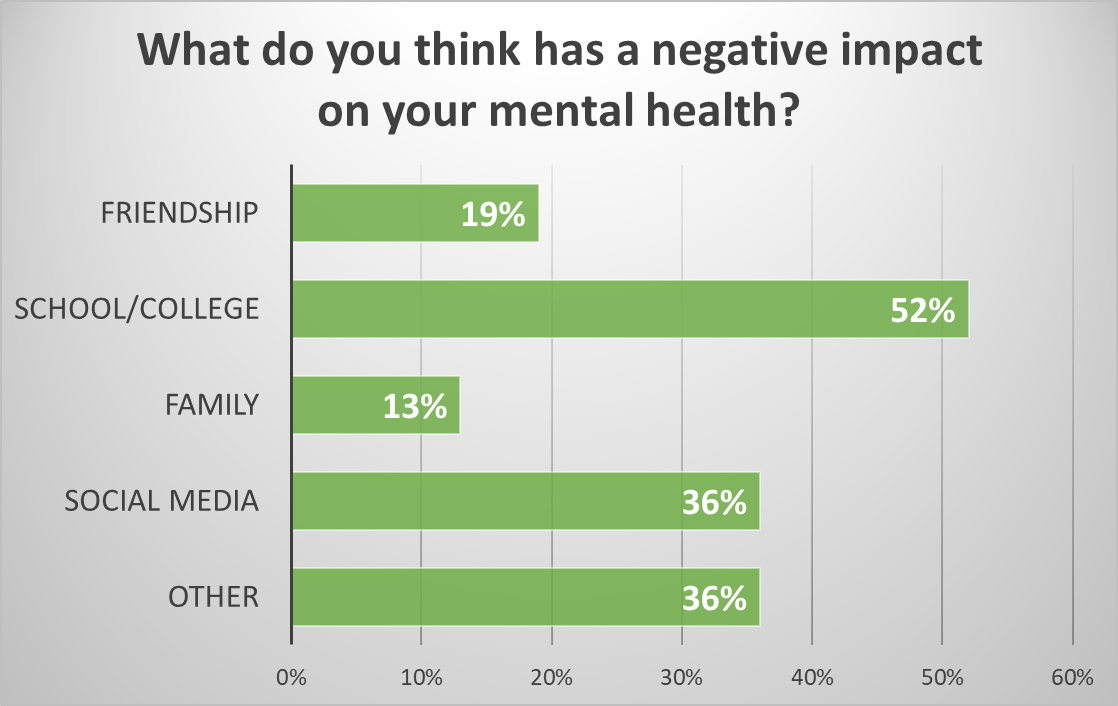
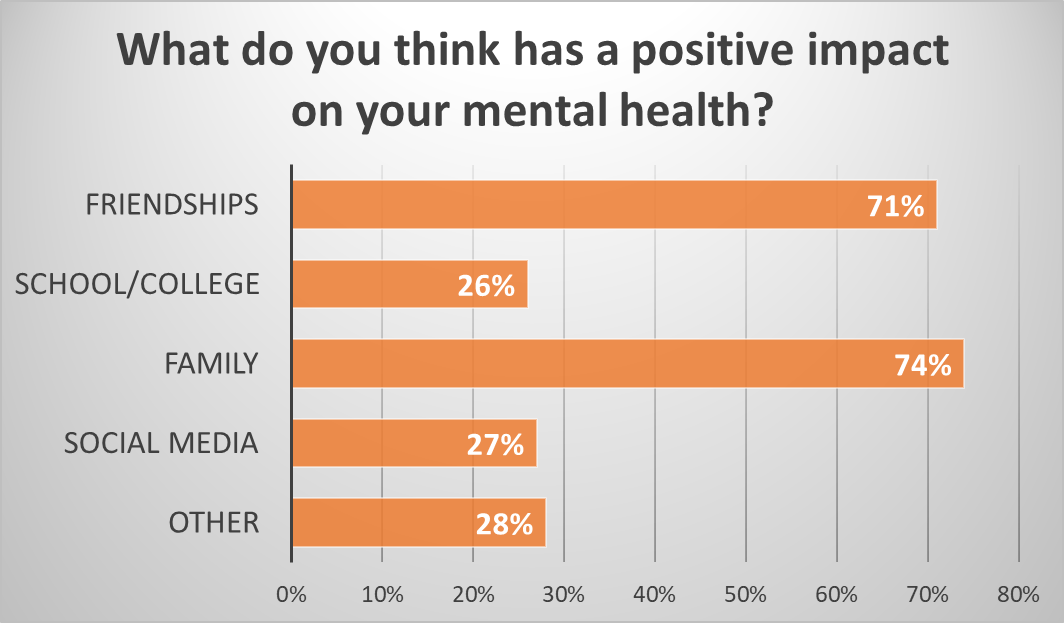
The scale of this challenge is evident in our data: 52% of young people identified school/college as having a negative impact on their mental health – exactly double the number who see it as positive (26%). This creates a troubling picture where the very environment meant to nurture learning becomes a source of distress.
*Young people could choose more than one option
However, our work also highlights the positive factors that keep young people engaged with school. Students consistently told us about three key areas that make the difference:
Learning and Growth: “School is a good place to learn new knowledge and I enjoy learning new things” and “School is fun and I have a chance to be creative.”
Future Opportunities: “School is helping me achieve my goals for the future” – showing that when young people can connect their current learning to meaningful future possibilities, engagement increases.
Relationships: “My teacher helps me in lessons” and “Going to school and connecting with my friends really helps me.” One student shared how “School have made changes so my mental health is better there…My mental health was worse in the past but autism referral, family understanding, counselling and school helping has helped a lot.”
What This Means for Schools and Local Authorities
Both the DfE report and our own research point to the same conclusion: addressing student absence requires systemic change, not just individual interventions.
Our research with young people has led us to five key recommendations for schools and Local Authorities:
- A move towards genuine and embedded trauma-informed and relational practices in schools. Which should include a shift from strict behaviour policies to relationship-based ones
- The current educational system needs re-evaluating with a focus on finding ways to incorporate Self Determination Theory principles of Autonomy, Competence, and Relatedness across all layers of school life
- An update of the National Curriculum to be more in line with the needs and demands of 21st-century learners
- Further exploration and appreciation of the digital lives that young people now live. This includes ensuring this environment is safe and also drawing on it as a way to motivate learning and support mental health in positive ways
- Increased opportunities for all young people to have access to a range of activities that do not solely focus on academic ability or improvement, in and out of school. This should include sport, the arts, suitable in and outside spaces and a growth mindset outlook from all
As one of our Educational Psychologists reflects, Young people have complicated and multi-faceted lives, both in the real & digital worlds. Looking at their lives in narrow ways does them a huge disservice. “Young people should go to school” disregards the varied aspects that are involved in this experience. We need to think more broadly about intrinsic motivation and joy for learning, we need to acknowledge the profound relational elements of young peoples’ lives and we need to appreciate their world (& ours) is digital.
To truly cultivate a generation of mentally healthy, motivated, and skilled individuals, systemic change is necessary. To do this is the most meaningful way we must also include the young people in decision making and planning and allow them a voice in the future of education. We need to take the young people with us, listen to them, work with them and learn from them.
This is what we intend to continue doing.
Psychology Direct’s Role in Supporting Attendance and Wellbeing
Here at Psychology Direct, we can provide much-needed support to schools and Local Authorities in responding to the findings of this crucial DfE report. Our expert Educational Practitioners (EPs) can provide:
- Early identification and assessment to identify underlying mental health needs or other barriers to attendance, providing clarity where it’s most needed.
- Strategic planning and consultation, working with school leaders and LAs to develop whole-school approaches and preventative strategies that foster positive mental health and improve attendance.
- Targeted interventions to support the designing and implementation of interventions for students struggling with anxiety, social-emotional difficulties, or other mental health challenges impacting their school life.
- Training for school staff on understanding the links between mental health and absence, recognising early signs, and implementing supportive strategies in the classroom.
- By partnering with Psychology Direct, you gain access to expert knowledge that translates research into actionable solutions, helping you build a more resilient and supportive educational environment for all students.
If you want to see how Psychology Direct can help your School or Local Authority to improve your approach to student absences, click here and one of our friendly team will be able to guide you in the right direction.